
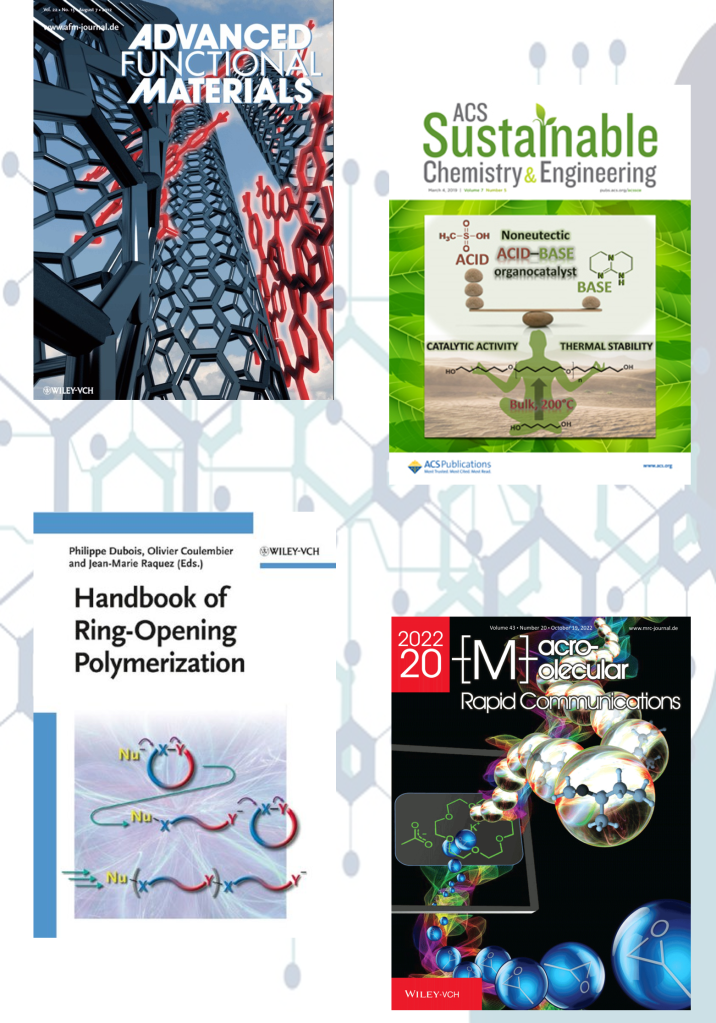
Our Last 5 Publications:
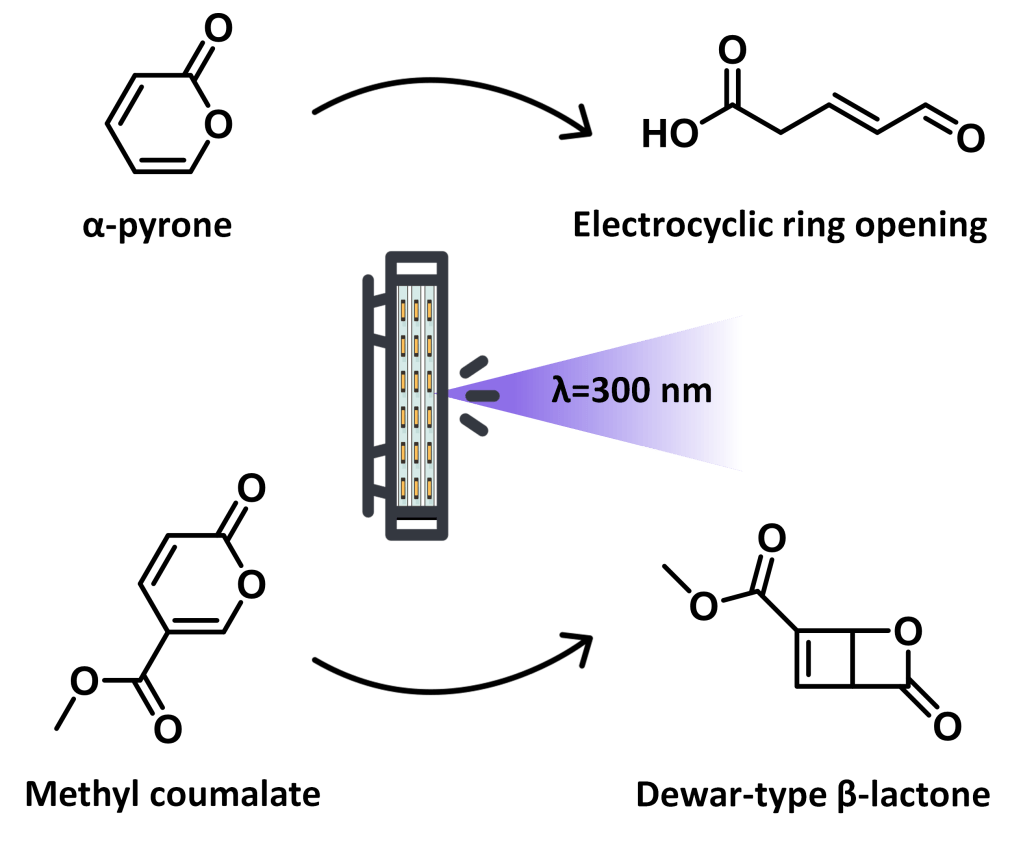
Narrow-Band UV-LED Photochemistry of α-Pyrone and Methyl Coumalate: A Comparative Study of Photoproduct Formation
To come …
Decoupling the Roles of Chain Length, Entanglements, and Intermolecular Interactions on the Melt Memory of Semicrystalline Polar Homopolymers
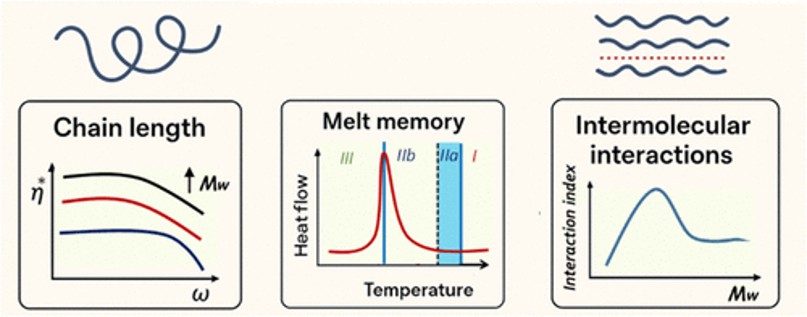
We report a systematic study of melt memory in semicrystalline polar polymers using model series of poly(ε-caprolactone) and poly(ethylene oxide). By combining polymer synthesis, DSC self-nucleation, SAXS, and rheology over a broad molecular-weight range, we disentangle the respective roles of chain length, intermolecular interactions, and entanglements. Our results demonstrate that melt memory can emerge below the entanglement molecular weight when intermolecular interactions are sufficiently strong, while entanglements further amplify the effect. The study establishes a unified framework linking molecular architecture to melt memory in polar polymers.
Boosting PVC Reactivity through Iodination for CO2-Derived Functionalization
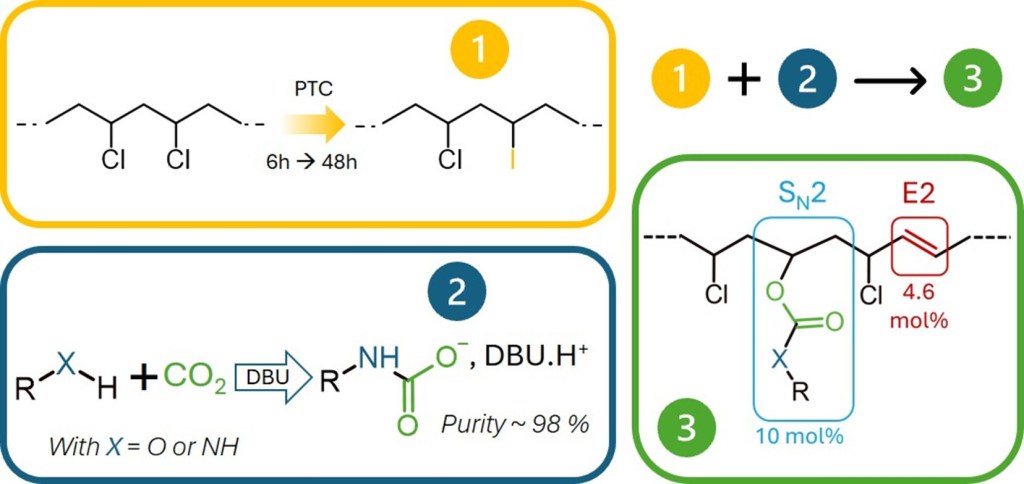
We demonstrate that aqueous phase-transfer catalysis enables selective iodination of PVC under mild and sustainable conditions. Subsequent reaction with a DBU-based CO2-binding amine (CO2BAM) achieves efficient SN2 substitution at CH-X centers, improving CO2 incorporation fourfold relative to previous CO2BAL strategies, reaching a 10 mol% yiled. The polymer remains fully soluble, demonstrating a greener, safer, and effective approach to PVC structural modification.
How chain stereoconfiguration and molecular weight influence Poly(propylene oxide) crystallization
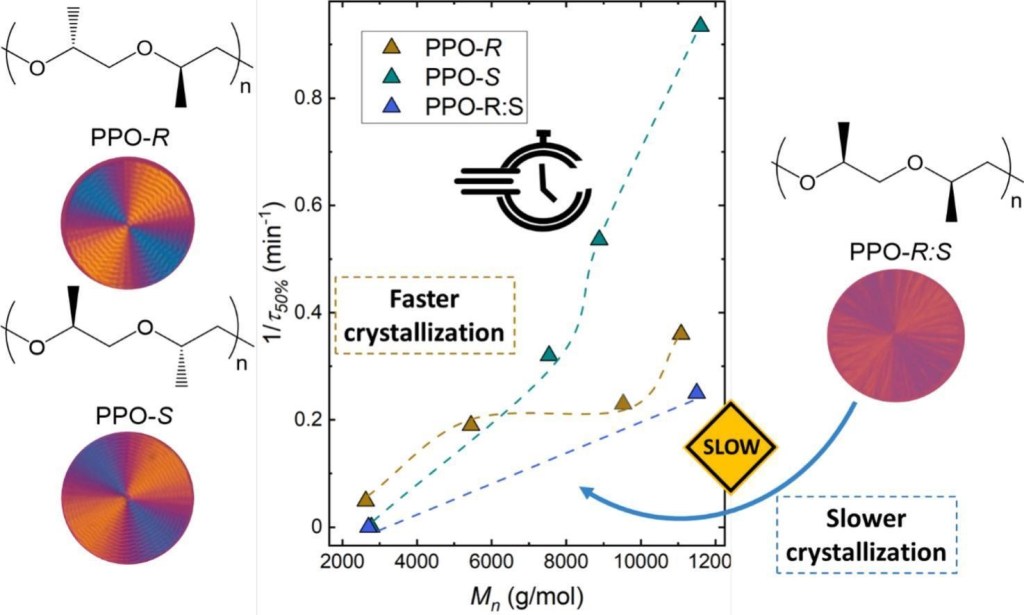
This work investigates how chain stereoconfiguration and molecular weight affect the crystallization of poly(propylene oxide) (PPO). Although enantiopure PPO-R and PPO-S crystallize into the same crystal structure, clear and reproducible differences in crystallization kinetics are observed, with an unexpected inversion as molecular weight increases. Racemic PPO-R:S blends show slower crystallization without stereocomplex formation, highlighting subtle chirality-driven effects in the melt and offering new strategies to tune crystallization in PPO-based materials.
Tripartite Hydrogen-Bonding as a Driving Force for High-Concentration Cyclization of Poly(L-lactide)
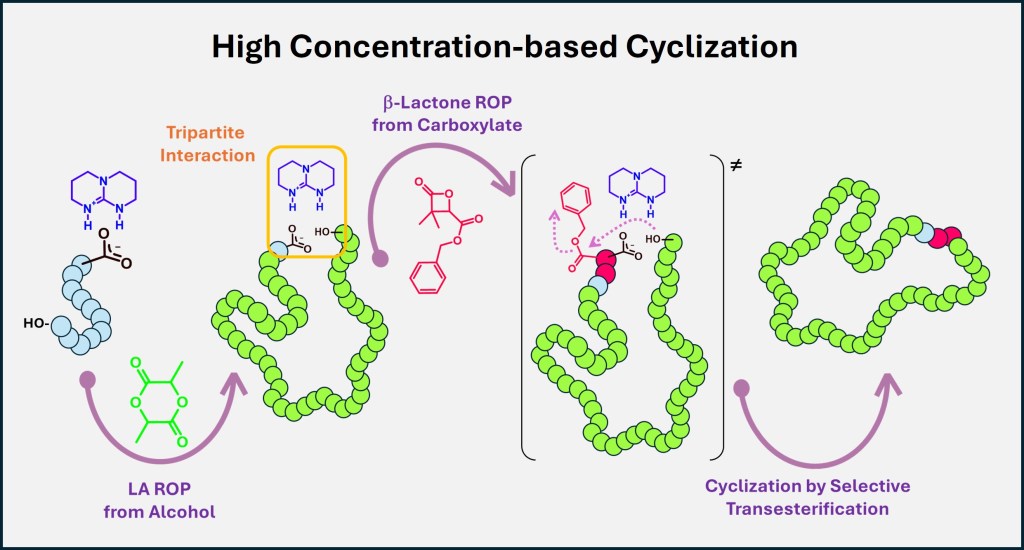
Here, we report a three-step strategy enabling efficient cyclization of high-Mn PLLA at 0.5 M. Key to success is a persistent tripartite complex driven by hydrogen bonding and ion pairing. Selective intramolecular transesterification at a benzylic ester triggers ring closure, affording cyclic PLLA (Mn ≈ 26,000 g/mol) under synthetically practical conditions. SPM imaging reveals nanorings with diameters consistent with the expected contour length of cyclic PLLA chains.

